Septic tank pumping
Scheduled pumping to remove built-up sludge and scum before they reach the outlet and push solids into the drain field.
Serving North Port, FL · (941) 394-0792
Septic tank pumping, cleaning, and inspection for Port Charlotte homes, built for the area's sandy soils and high water table.
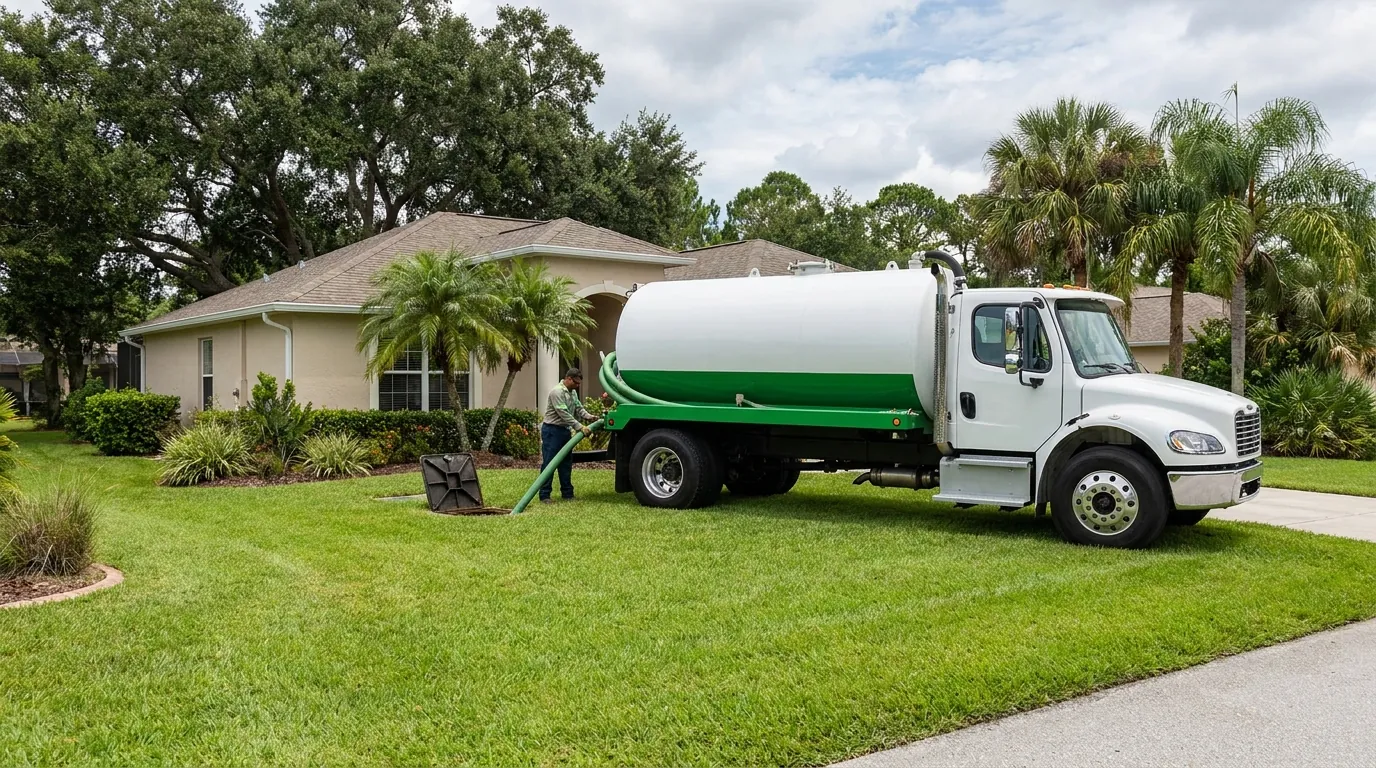
Port Charlotte sits just southeast of North Port, spread across the flat, canal-laced grid that defines much of Charlotte County. A large share of homes here were platted decades ago on generous lots, and many still run on their own septic systems rather than a central sewer connection. That makes regular pumping and inspection part of ordinary home maintenance, not an emergency to put off.
The ground under Port Charlotte is sandy and drains fast, but it also sits close to a high water table — especially near the miles of saltwater and freshwater canals that thread through the community. When groundwater rises, a septic tank has less soil above the water line to work with, and the drain field can struggle to absorb what the tank sends it. That is why we look at both the tank and the field together, and why pumping intervals here often run shorter than the national rule of thumb.
Whether you have noticed a slow drain, an odor near the tank lid, or you simply want a baseline reading, we can pump the tank, measure the sludge and scum layers, and tell you plainly what the numbers mean for your home.
Core septic work for homes across the Port Charlotte area.
Scheduled pumping to remove built-up sludge and scum before they reach the outlet and push solids into the drain field.
A full look at tank levels, baffles, and drain-field response — useful before a sale or when problems keep recurring.
Assessment and care for the absorption field, where Port Charlotte's high water table does its most damage.
Tell us your address and what you have noticed, and we will help you plan pumping or an inspection.
Serving Port Charlotte and the surrounding Charlotte County communities.
Most households benefit from pumping every three to five years, but Port Charlotte's high water table and canal-side lots can shorten that. Measuring the sludge layer during a pumping visit gives you a firm interval for your specific home.
Yes. When groundwater rises, the drain field has less dry soil to absorb effluent, which can cause slow drains or surfacing. Homes near canals often need closer monitoring than those on higher ground.
We cover Port Charlotte and neighboring communities across Charlotte County. Give us your address and we will confirm scheduling for your area.