Soggy or spongy ground over the field
Wet, soft soil above the trenches — even in dry weather — means effluent is rising instead of soaking in.
Serving North Port, FL · (941) 394-0792
Drain field service in North Port, FL. Spot a failing field early and learn how sandy soil and a high water table affect drain field health and repair.
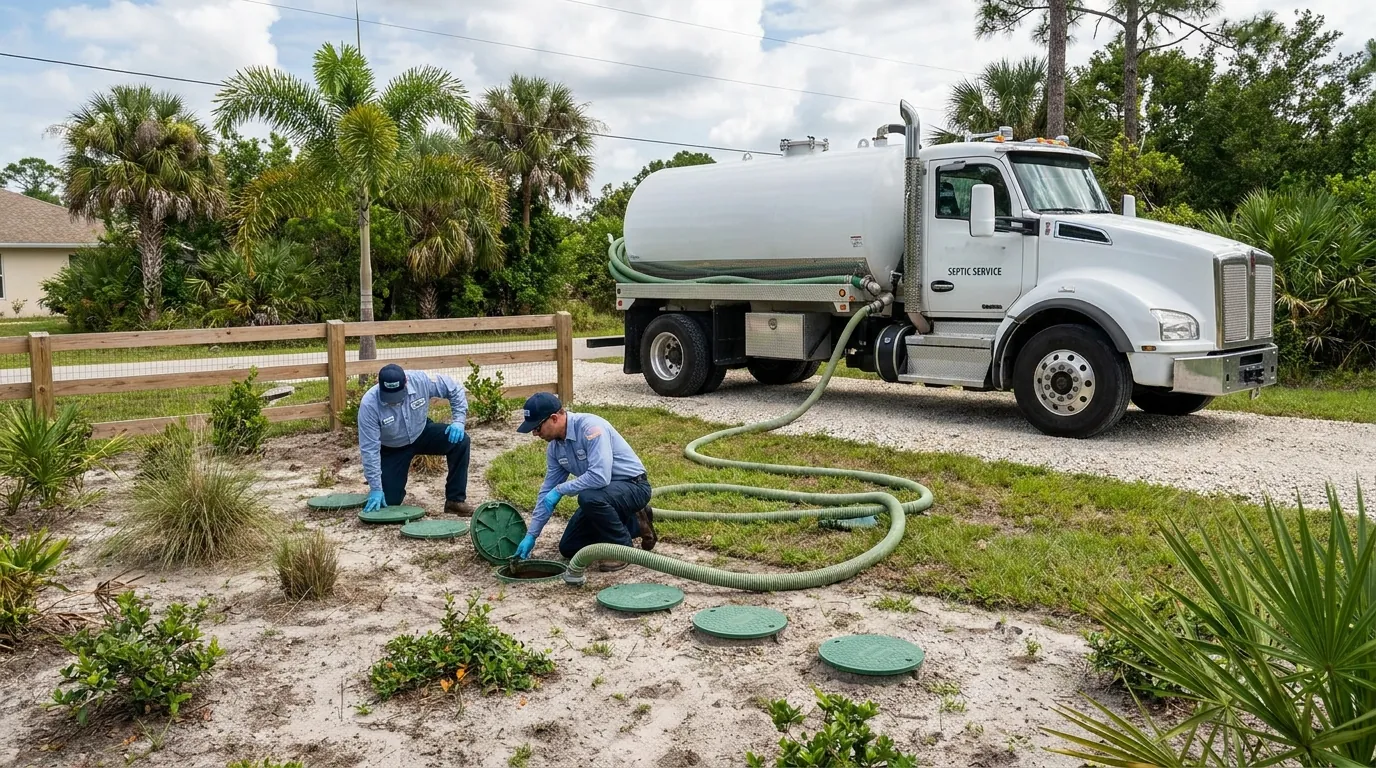
After solids settle in the tank, the liquid effluent flows out to the drain field — a network of perforated pipes in gravel-filled trenches — where it filters down through the soil. When the field works, you never think about it. When it fails, it's the most expensive part of the system to fix.
North Port sits on sandy soil with a high water table, and both cut two ways for a drain field. Sand drains quickly, which is good, but a high water table means the soil below the trenches can already be near saturation during the rainy months. When groundwater rises to meet the field, effluent has nowhere to go and surfaces in the yard.
The most common cause of a failed field isn't the field itself — it's solids escaping a neglected tank and clogging the soil. That's why regular septic tank pumping and a septic system inspection are the best protection a drain field can have.
Catching these early can mean the difference between a service call and a replacement.
Wet, soft soil above the trenches — even in dry weather — means effluent is rising instead of soaking in.
Grass over a struggling field often grows greener and faster because it's feeding on surfacing effluent.
A persistent smell near the field, strongest after rain, signals effluent reaching the surface.
If pumping the tank doesn't restore normal drainage, the bottleneck may be a saturated or clogged field.
A field that only backs up when the water table rises is a warning that it's operating near its limit.
Service starts with diagnosis, because the fix depends on the cause.
The tank is checked and pumped first, since an overloaded tank mimics field failure and pushing solids out makes any field problem worse.
Standing effluent, soil saturation, and how quickly the field accepts flow are evaluated to gauge how far gone it is.
Reducing water load and clearing solids gives a stressed field a chance to recover if it isn't fully clogged.
A field that's truly failed needs rehabilitation or replacement, which is planned around your lot, soil, and water table.
Wet spots, odors, or backups over your field? Reach out early — the sooner a field problem is diagnosed, the more options you have.
Serving North Port and nearby communities.
Sometimes. If the cause is an overloaded tank pushing solids out, correcting that and reducing water load can let a stressed field recover. A field that's fully clogged with solids usually needs rehabilitation or replacement.
North Port's high water table rises during heavy rain, reducing the soil's ability to absorb effluent. A field that copes in dry weather but backs up in the wet season is operating close to its limit and needs attention.
Pump the tank on schedule so solids never reach the field, keep heavy vehicles and structures off it, and divert roof and surface runoff away from the trenches. Conserving water during heavy rain also helps.
Pumping removes the source of new solids and relieves immediate overload, but it doesn't unclog soil that's already saturated with solids. It's a necessary first step, not always the whole fix.