Slow drains throughout the house
When several fixtures drain slowly at once — not just one sink — the bottleneck is usually the tank or the line to it, not a local clog.
Serving North Port, FL · (941) 394-0792
Septic tank pumping service in North Port, FL. Learn the warning signs, the pumping process, and how sandy soil and a high water table affect frequency.
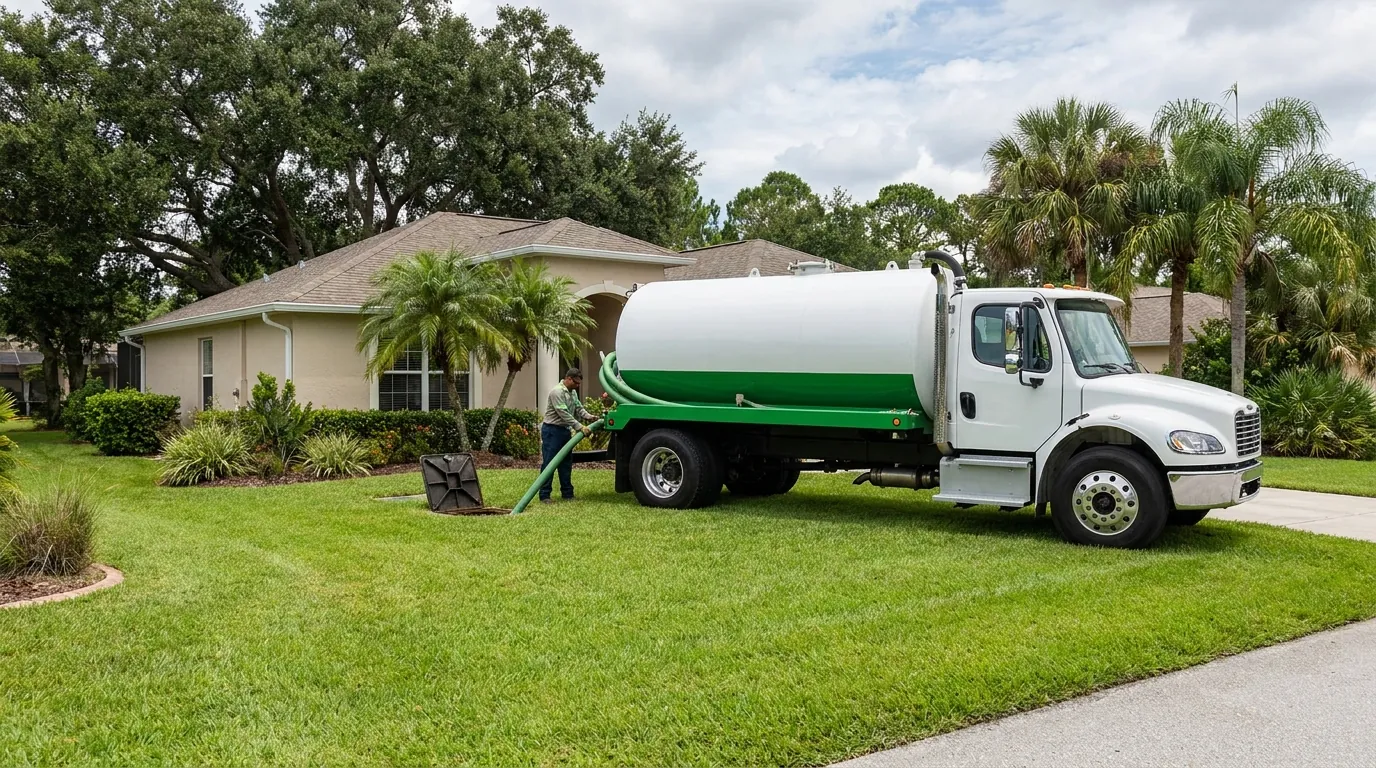
Every septic tank collects solids that settle to the bottom as sludge and fats that float to the top as scum. Pumping removes both layers before they build up far enough to spill into the drain field. In North Port, that job carries a little more urgency than it does farther north, because our sandy soils and high water table give a failing system fewer places to hide its problems.
A tank that is overdue for septic tank pumping pushes solids into the drain field, where they clog the soil and shorten the life of the whole system. Replacing a drain field is one of the most expensive repairs a homeowner can face, which is why regular pumping is the cheapest insurance you can buy for a septic system.
This page covers the warning signs of a full tank, what the pumping visit actually involves, and how local ground conditions change how often you should schedule the work. If you already suspect a backup, a septic emergency service call is the faster route.
Most septic problems announce themselves before they turn into a backup. Watch for these.
When several fixtures drain slowly at once — not just one sink — the bottleneck is usually the tank or the line to it, not a local clog.
Air forced back up the plumbing as waste struggles to move often means the tank is too full to accept more flow.
A sulfur or sewage smell in the yard, especially after rain, points to solids or effluent surfacing where they shouldn't.
Unusually green, soggy grass above the field means effluent is rising toward the surface instead of soaking down through the sand.
The clearest and most serious sign. Stop using water and call for service before it worsens.
A standard septic tank pumping service follows the same basic sequence.
The tank's inlet and outlet access ports are located and exposed. Homes with risers make this quick; buried lids may need light digging.
Before pumping, the depth of solids is checked. This tells you how close you were to trouble and helps set your next interval.
The vacuum hose removes liquid, then the scum and sludge layers, agitating the contents so the compacted crust lifts out rather than staying behind.
With the tank empty, the baffles that keep solids from escaping to the drain field are checked for damage or corrosion.
Watching how quickly the tank takes water again can reveal a drain field or backflow issue worth addressing early.
Whether you're on a regular schedule or noticing warning signs, reach out to line up a pumping visit for your North Port property.
Serving North Port and nearby communities across the region.
Most households need pumping every three to five years, but North Port's high water table and heavy rain can shorten that. A three-person household with a 1,000-gallon tank often lands near the shorter end of that range.
Pumping removes solids and liquid from the tank itself. It doesn't clean the drain field, and it won't fix a field that's already saturated — that's why measuring sludge and inspecting baffles during the visit matters.
Tank size, how overdue it is, access difficulty, and whether risers are installed all affect the price. A tank that hasn't been pumped in a decade takes longer and may need extra agitation.
No. Pumped waste has to be transported and disposed of at an approved facility, and the equipment needed for a full pump-out isn't something homeowners can rent safely. This is a job for a service truck.
A healthy tank generates the bacteria it needs on its own. Additives are generally unnecessary and never replace pumping — solids still have to be physically removed.