The tank fills up faster than it used to
Compacted sludge reduces usable tank volume, so intervals between service keep getting shorter.
Serving North Port, FL · (941) 394-0792
Septic tank cleaning in North Port, FL. Learn how cleaning differs from pumping, why it matters in sandy soil, and how to tell your tank needs a full cleanout.
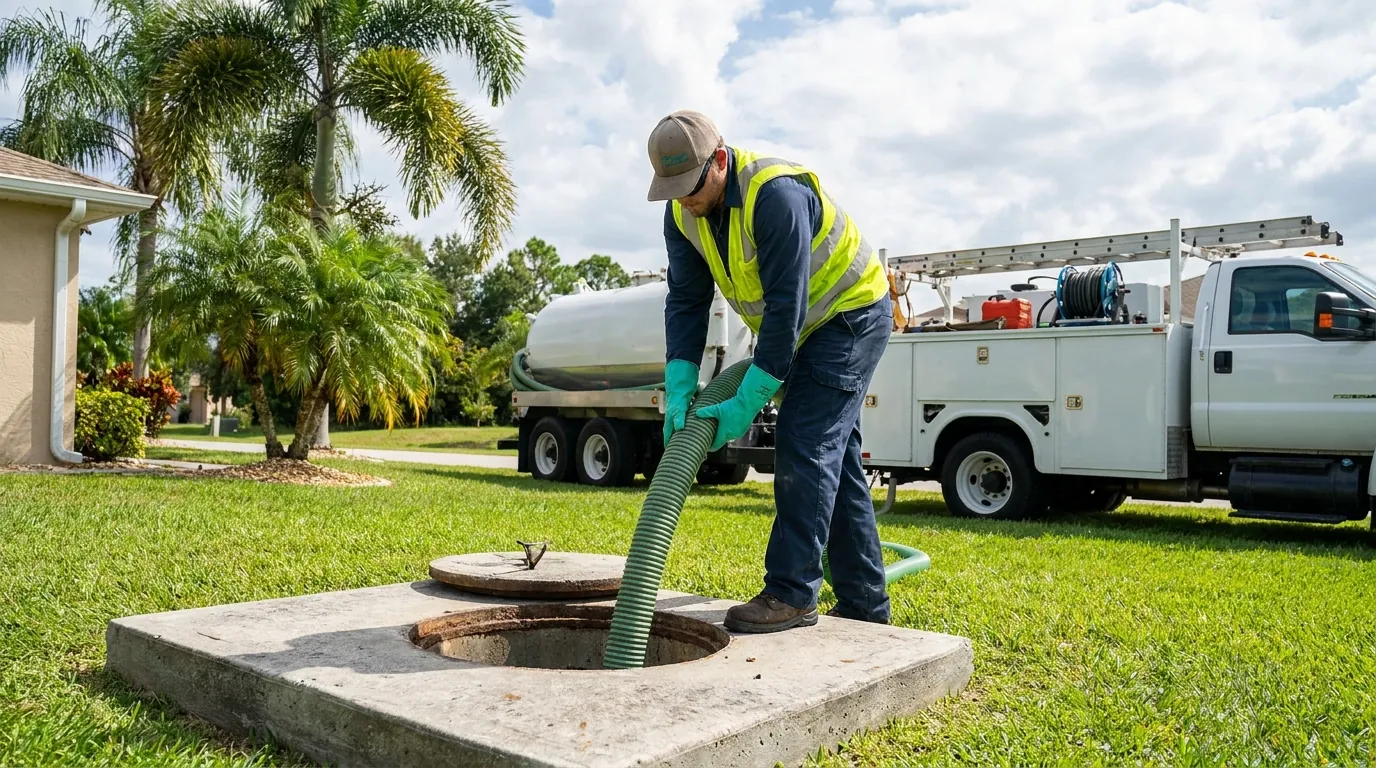
People use "pumping" and "cleaning" interchangeably, but there's a real difference. Pumping draws out the liquid and the loose solids. Cleaning a septic tank means removing the compacted sludge and hardened crust that cling to the floor and walls after years of buildup — the material a quick pump-out leaves behind.
In North Port, where sandy soil and a high water table already put stress on drain fields, that leftover sludge matters. Every bit of solid that stays in the tank is closer to escaping into the field. A proper cleaning of the septic tank agitates and removes that stubborn layer so the tank starts fresh.
Cleaning is often paired with a septic system inspection, because an empty, clean tank is the only time you can clearly see the baffles, walls, and floor. If your last few visits were quick septic tank pumping appointments, a full cleaning may be overdue.
These point to buildup that ordinary pumping won't clear.
Compacted sludge reduces usable tank volume, so intervals between service keep getting shorter.
Smells that come back quickly suggest solids the pump truck couldn't reach are still fermenting in the tank.
When the scum layer has hardened into a crust, it needs to be broken up and cleaned out, not just skimmed.
If the tank has only ever been quick-pumped, a cleaning removes the accumulated bottom layer for the first time.
A thorough cleanout goes a step beyond a routine pump.
The tank is emptied completely, including the sludge at the bottom that settles hardest.
The hardened scum layer is agitated and drawn out rather than left floating for the next fill cycle.
Water is used to loosen residue clinging to the walls and floor so it can be vacuumed out.
With the tank clean, the baffles, tees, and structure can be checked while everything is visible.
If your tank hasn't had a full cleanout in years, or symptoms keep coming back, get in touch to schedule a cleaning in North Port.
Serving North Port and surrounding communities.
Not exactly. Pumping removes liquid and loose solids; cleaning removes the compacted sludge and hardened crust that pumping alone leaves behind. A full cleaning resets the tank more completely.
If service intervals keep shrinking, odors return quickly after pumping, or the tank has never had a full cleanout, a cleaning is likely warranted. An inspection during the visit confirms it.
No. The bacteria that break down waste re-establish themselves quickly from normal household use. There's no need to add starter products after a cleaning.
Sandy soil drains fast, but that means a compromised tank sends solids into the field quickly, where they clog the sand. Keeping the tank thoroughly clean protects the field's ability to absorb effluent.