Slow kitchen drains
When sinks and floor drains empty sluggishly, grease is narrowing the passage out of the trap.
Serving North Port, FL · (941) 394-0792
Grease trap pumping in North Port, FL for restaurants and food businesses. Learn how often to pump, warning signs, and how the process protects your lines.
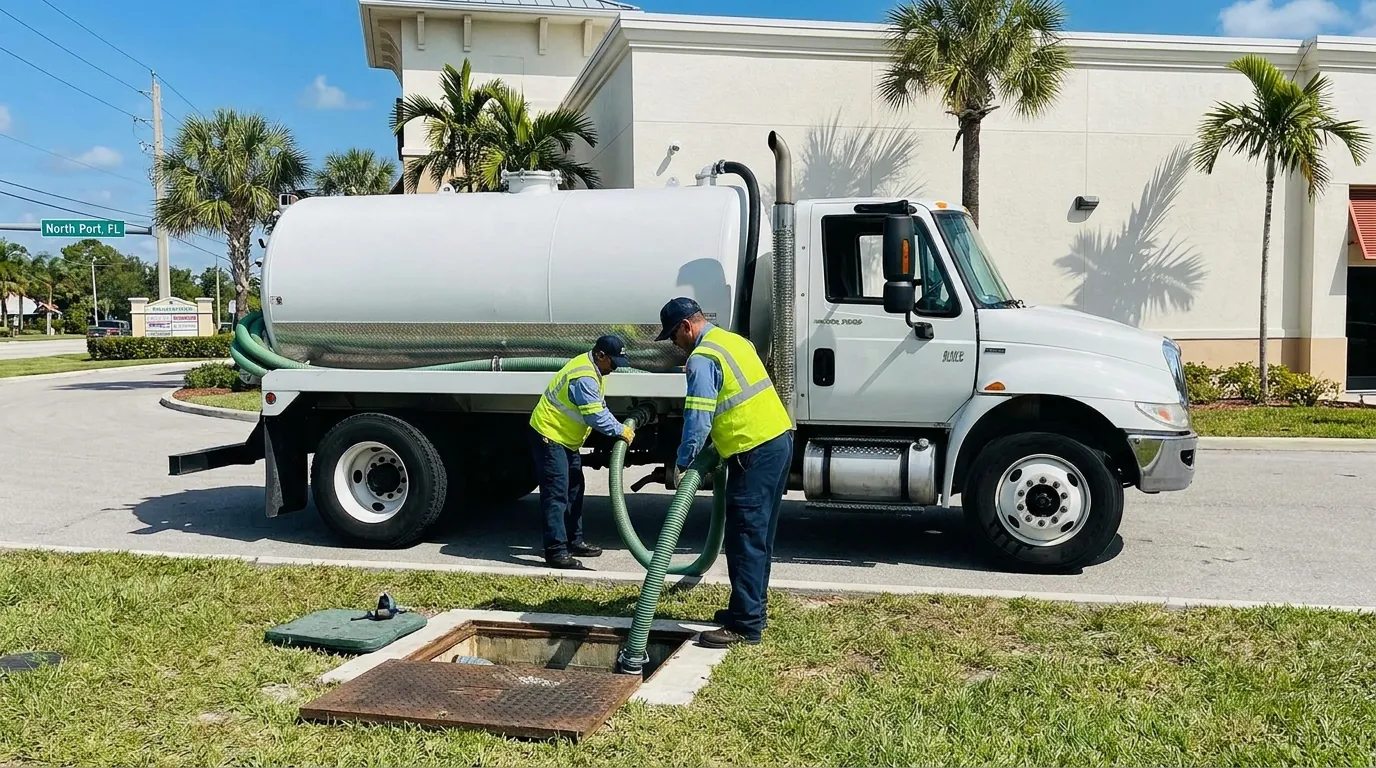
Any kitchen that produces fats, oils, and grease relies on a grease trap to stop that material from entering the drain lines. The trap slows wastewater so grease cools, hardens, and floats while food solids sink — keeping both out of the plumbing downstream. Over time the trap fills with those layers and has to be pumped, or the grease overflows into the lines and causes clogs and backups.
For food businesses in North Port on a septic system, a neglected grease trap is doubly harmful: grease that reaches the tank and drain field coats the soil and destroys its ability to absorb effluent. Keeping the trap on a regular pumping schedule protects the entire system, right down to the field.
Grease trap service pairs naturally with septic tank pumping for properties on septic, and a septic system inspection can confirm that grease hasn't already migrated downstream.
Kitchens usually get warning before a full backup.
When sinks and floor drains empty sluggishly, grease is narrowing the passage out of the trap.
A rancid smell means grease and solids have built up and started to break down inside the trap.
When the floating layer reaches a large share of the trap's depth, it's time to pump before it overflows.
Grease escaping a full trap solidifies in the lines and causes recurring clogs that snaking only temporarily clears.
The service removes the full contents and restores the trap's capacity.
The lid is removed and the depth of the grease and solids layers is checked to confirm service is due.
Grease, water, and settled solids are removed together so the trap is fully emptied, not just skimmed.
The walls, baffles, and screens are checked and cleared so the trap works at full capacity again.
Flow through the trap is checked to make sure the outlet and downstream lines are clear.
Keep your kitchen draining and your system protected. Reach out to set up grease trap service for your North Port business.
Serving food businesses in North Port and nearby communities.
Frequency depends on how much grease your kitchen produces and the size of the trap. Many busy kitchens need service every one to three months, while smaller operations may go longer — watching the grease layer depth is the surest guide.
Grease overflows the trap and hardens in the drain lines, causing clogs and backups. On a septic system it can also reach the tank and drain field, where it coats the soil and can lead to costly field damage.
Small under-sink traps can be maintained, but larger traps hold waste that must be pumped and disposed of at an approved facility. That requires the right equipment and handling.
No. Additives may loosen grease but the material still has to be physically removed. Relying on additives alone lets solids accumulate and eventually clog the trap or lines.