Sewage backing up indoors
Waste coming up through drains, tubs, or toilets is a health hazard and needs immediate attention.
Serving North Port, FL · (941) 394-0792
Septic emergency service in North Port, FL for backups and overflows. Know what to do first, what causes emergencies, and how fast response limits damage.
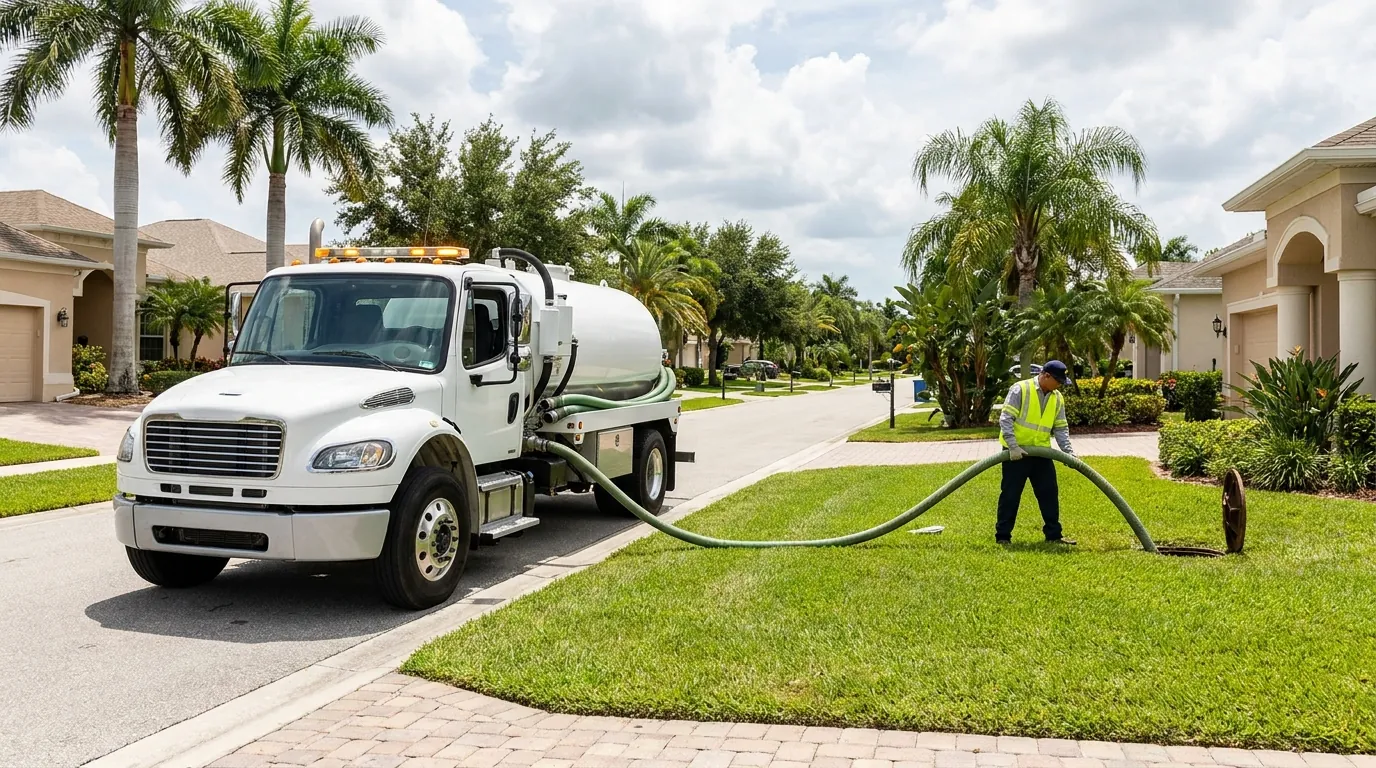
A slow drain is a warning. Sewage backing up into your home, standing effluent in the yard, or a tank that won't accept flow is an emergency — one that gets worse and more expensive every hour it's left alone. In North Port, the rainy season adds pressure: a high water table can push a marginal system over the edge in a single heavy storm.
The first priority in any septic emergency is to stop adding water. Every flush and every load of laundry adds to a system that already can't cope. From there, the cause has to be found: a full tank, a clogged line, a broken baffle, or a saturated drain field each call for a different response.
Many emergencies trace back to a tank that was overdue for septic tank pumping, and once the immediate crisis is handled a septic system inspection usually follows to find out why it happened and prevent a repeat.
These situations call for prompt service rather than a scheduled appointment.
Waste coming up through drains, tubs, or toilets is a health hazard and needs immediate attention.
Standing sewage over the tank or field means the system has nowhere to send waste and is overflowing.
When toilets, sinks, and tubs all back up together, the blockage is at the tank or main line, not a single fixture.
A powerful smell combined with fixtures that won't drain often precedes a full backup — act before it arrives.
Quick action on your part limits damage before service arrives.
Hold off on flushing, laundry, and dishwashing. Reducing flow keeps a backup from spreading while help is on the way.
Treat any surfacing sewage as a health hazard and keep the area clear until it can be handled properly.
On arrival, the tank is opened and checked to find whether it's full, blocked, or backing up from the field.
Pumping the tank usually relieves the immediate backup, after which the underlying cause is identified so it can be corrected.
If you have a backup or overflow, stop using water and reach out right away so the problem can be relieved and diagnosed.
Emergency response for North Port and nearby communities.
Stop using all water in the home right away — no flushing, laundry, or dishwashing. This keeps the backup from spreading and buys time until the tank can be relieved.
North Port's high water table rises with heavy rain, and when groundwater reaches the drain field, effluent can't drain and backs up. A system that copes in dry weather can overflow during a storm.
Pumping the tank usually relieves the immediate backup and stops sewage from surfacing. Whether that's the whole fix depends on the cause — a clogged line or saturated field may need further work afterward.
Keep the tank on a regular pumping schedule, watch for early warning signs like slow drains and odors, and be extra cautious with water use during the rainy season. Most emergencies build up gradually before they hit.