Tank structure and liquid level
The tank is checked for cracks, leaks, and a proper operating level. A level that's too high or too low both signal specific problems.
Serving North Port, FL · (941) 394-0792
Septic system inspection in North Port, FL. Spot problems early, evaluate repairs, and understand what an inspection covers before you buy or sell a home.
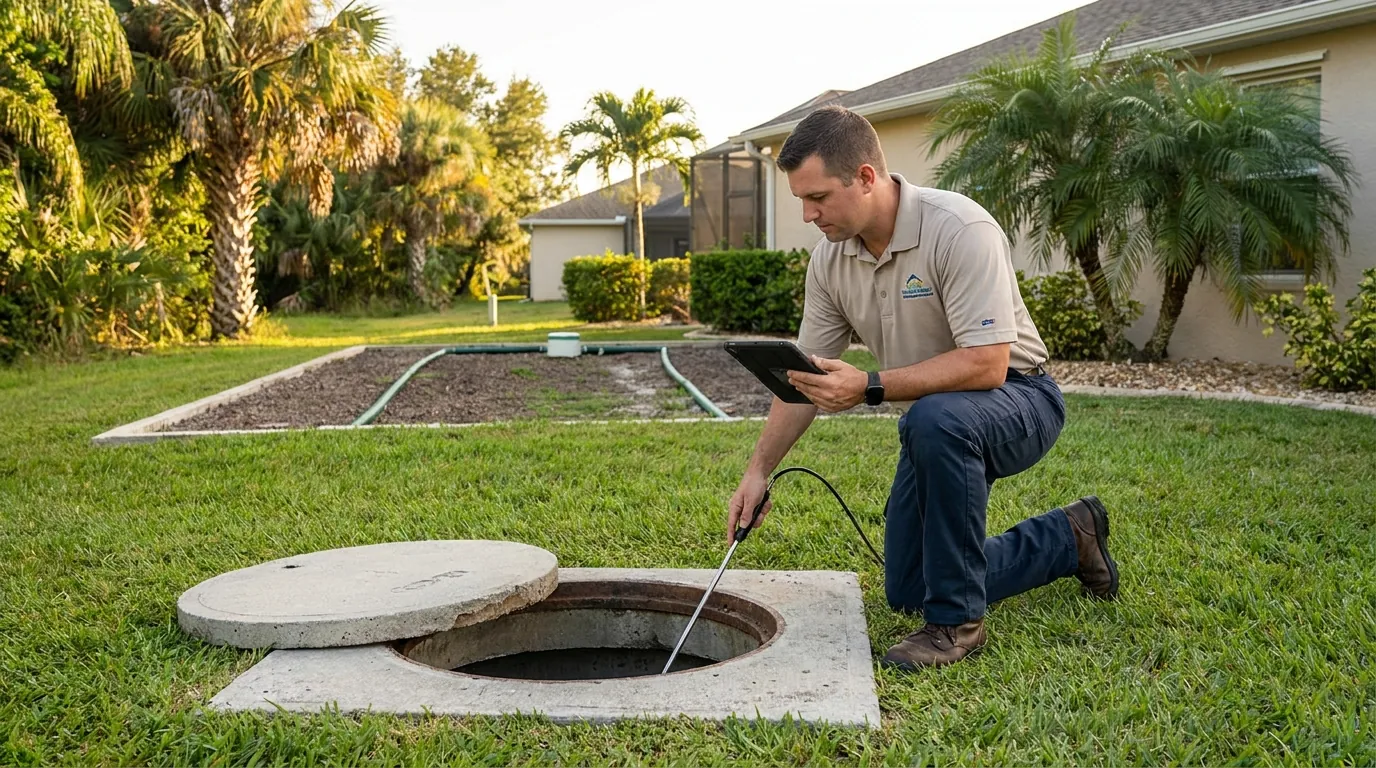
A septic system inspection is a checkup for the parts of your home you never see. It's worth doing before you buy a house on a septic system, before you sell one, and periodically on a system you already own — especially in North Port, where a high water table means a struggling drain field can go from marginal to failing in a single rainy season.
Inspections also tell you whether a problem needs full septic system repair or something simpler. Not every slow drain or wet spot means the field has failed; sometimes the fix is a cracked baffle, a clogged filter, or an overdue septic tank pumping. Knowing the difference saves money.
If an inspection turns up solids that have escaped into the field or a tank that's badly overdue, the next step is usually a thorough septic tank cleaning to reset the system before deciding on any larger work.
A complete inspection looks at the whole system, not just the tank.
The tank is checked for cracks, leaks, and a proper operating level. A level that's too high or too low both signal specific problems.
The inlet and outlet baffles keep solids in the tank. Missing or broken baffles let sludge flow straight to the drain field, where it does real damage.
Measuring both layers shows how full the tank is and whether solids are close to escaping into the field.
The field is checked for standing effluent, odors, and soggy ground — the classic signs of a saturated or failing field.
If the tank has an outlet filter, it's inspected and cleaned. A clogged filter mimics many symptoms of a full tank.
A typical visit moves through these stages.
Any available permits or as-built diagrams help locate components and confirm tank size before digging.
Lids are uncovered and the tank interior and liquid level are examined for immediate red flags.
Sludge and scum are measured, and in some inspections water is run to observe how the system handles flow.
You get a plain explanation of what's working, what needs attention now, and what to keep an eye on.
Buying, selling, or just want peace of mind before rainy season? Reach out to schedule an inspection in North Port.
Inspections available across North Port and nearby communities.
It's strongly recommended. A drain field repair or replacement can be one of the largest surprise expenses in a home purchase, and an inspection is the only way to know the system's real condition before closing.
Pumping empties the tank; an inspection evaluates the whole system's condition. Often a tank is pumped first so the interior, baffles, and floor can be examined clearly.
Yes. It distinguishes between minor fixes like a broken baffle or clogged filter and larger issues like a saturated drain field, so you can plan the right repair instead of guessing.
Every few years is reasonable for most homes, and sooner if you notice slow drains, odors, or wet spots. In North Port's high water table, checking before the summer rains is a smart habit.